
Google Sheets
Syncing segmented audiences to Google Sheets enables you to organize and manage your audience data conveniently in a spreadsheet format.
Walkthrough Video: Creating and Syncing to a New Google Spreadsheet
Step by Step Guide: Creating and Syncing to a New Google Spreadsheet
Connect your Google account, choose a spreadsheet, and set up a sync that writes an audience into it on a schedule.
Connect your Google account
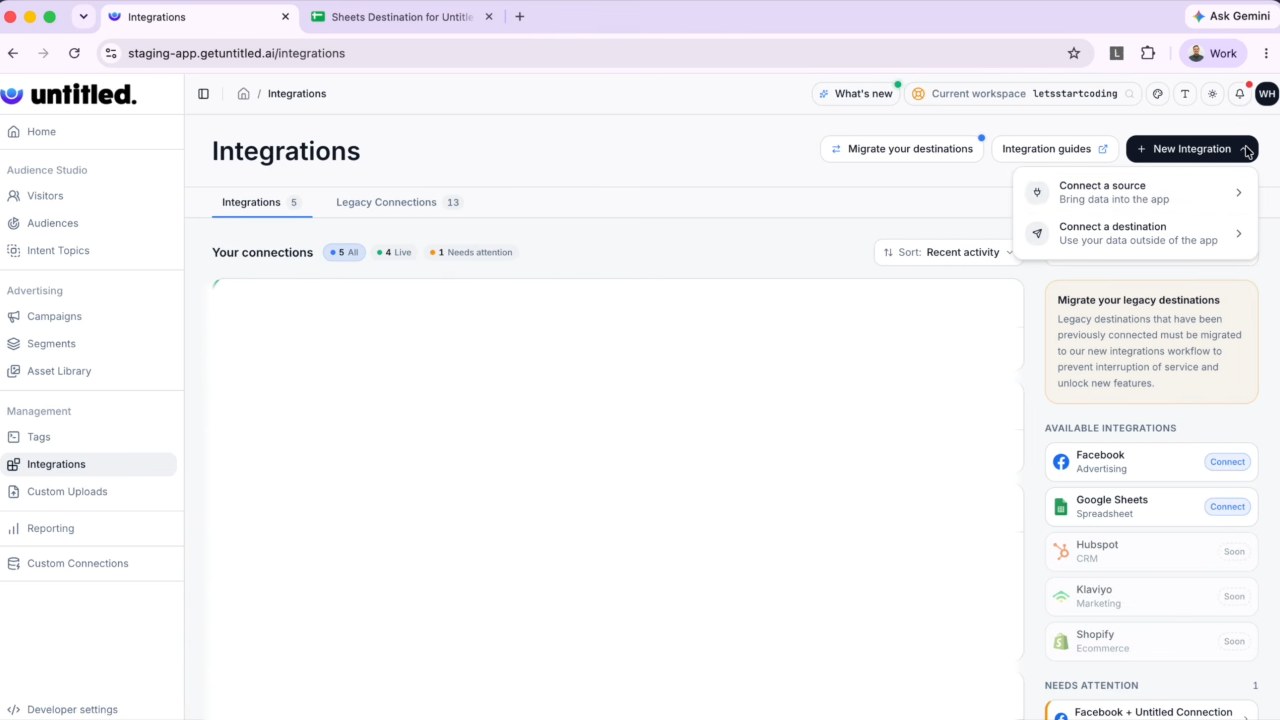
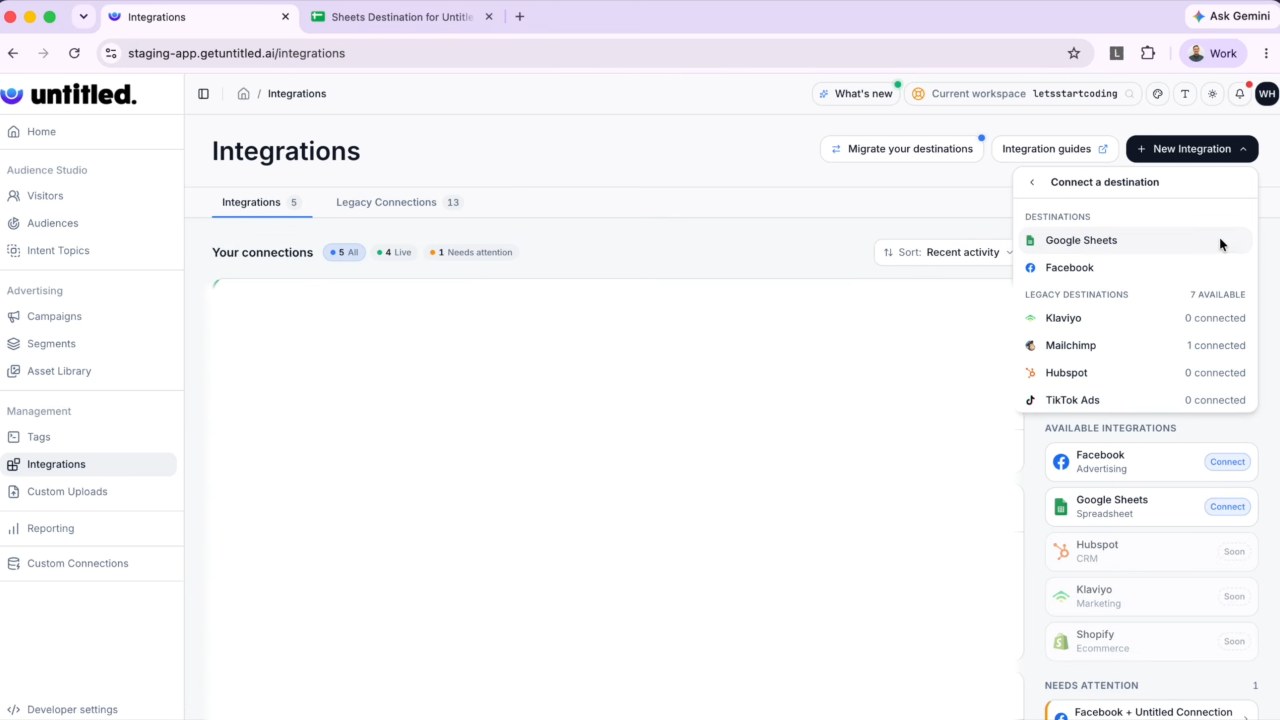
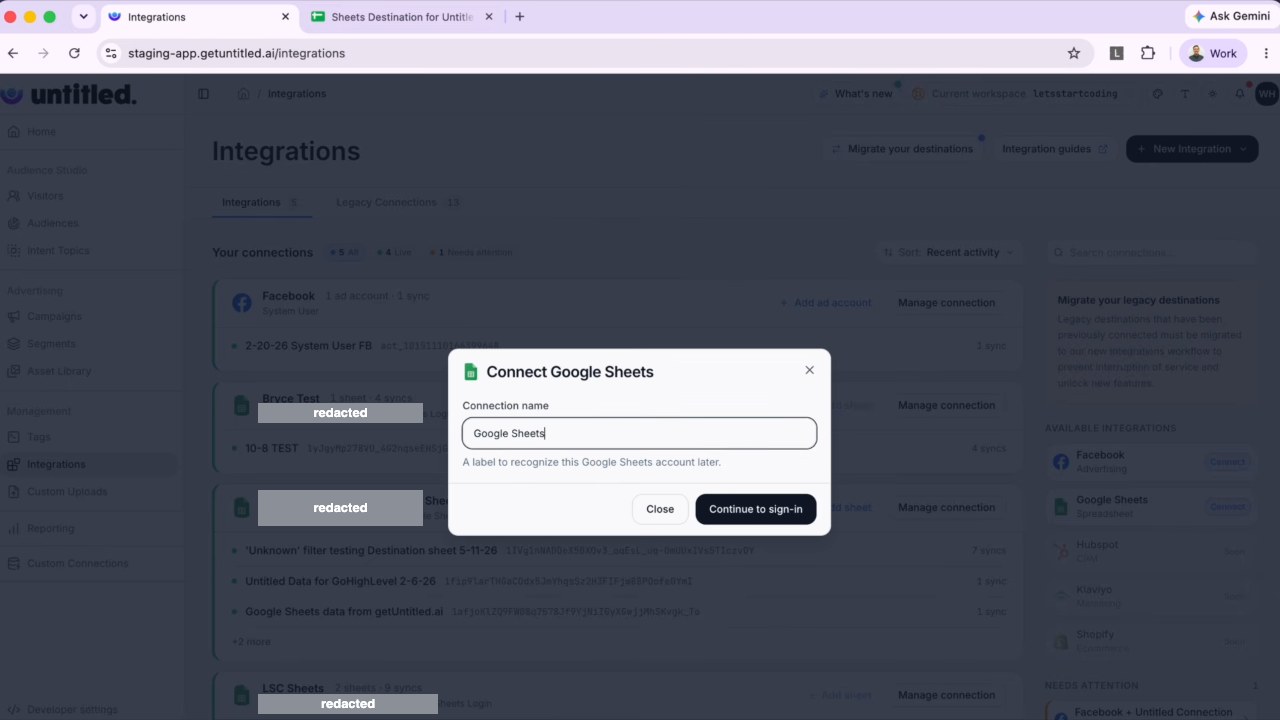
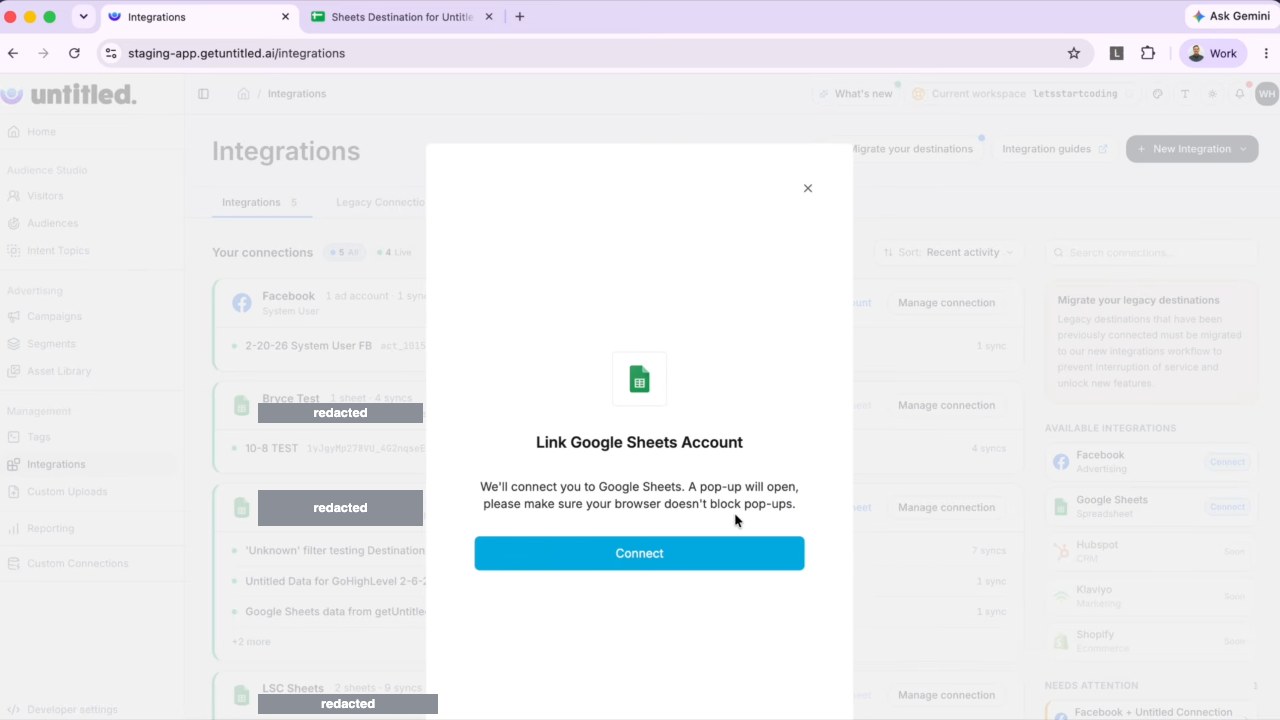
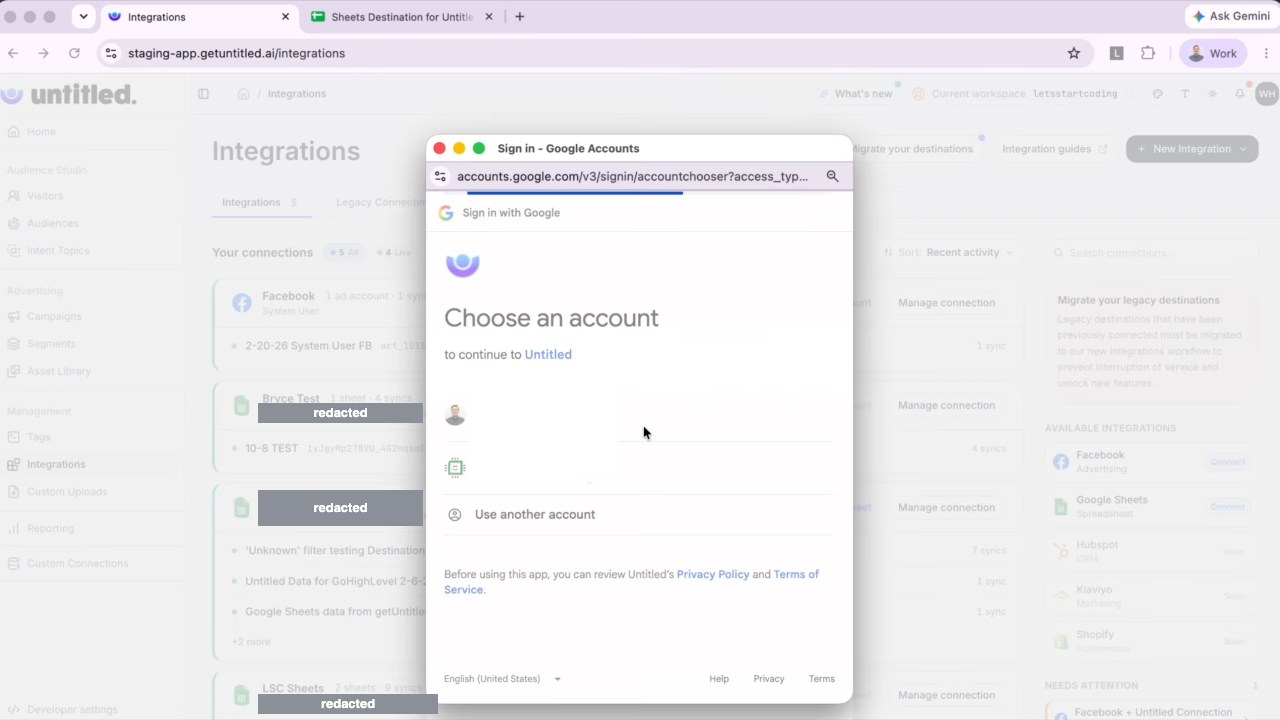
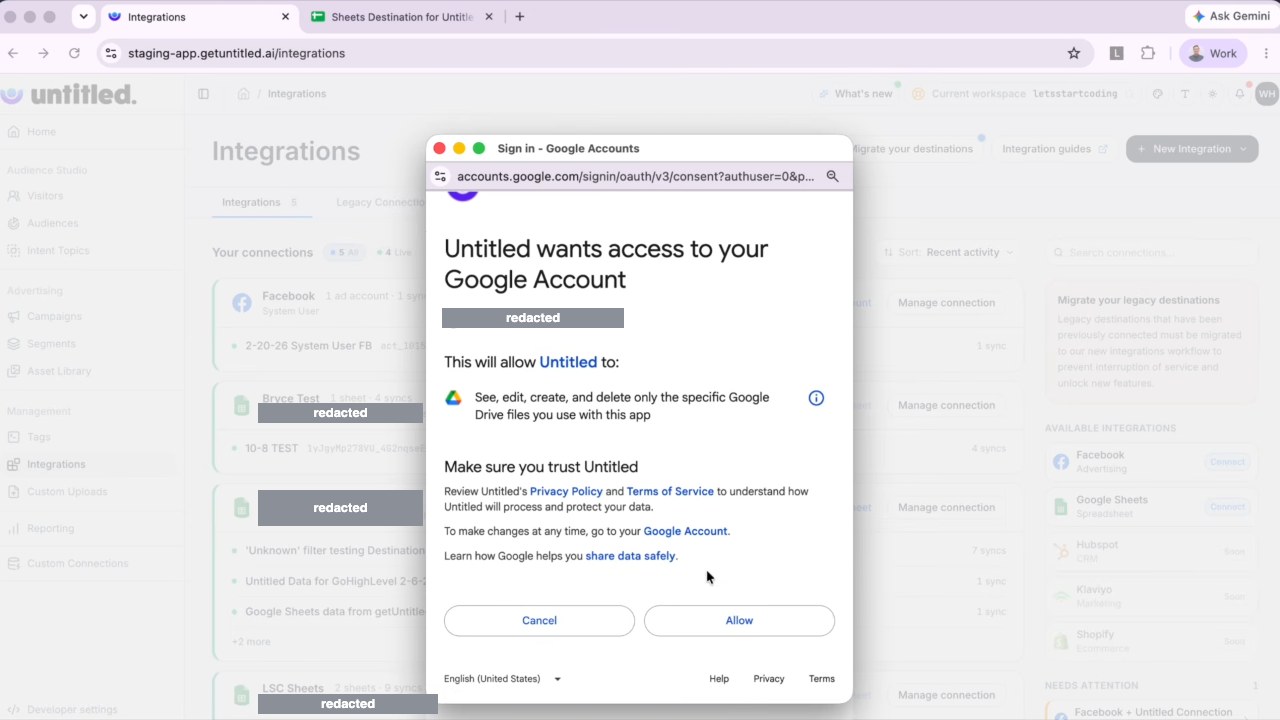
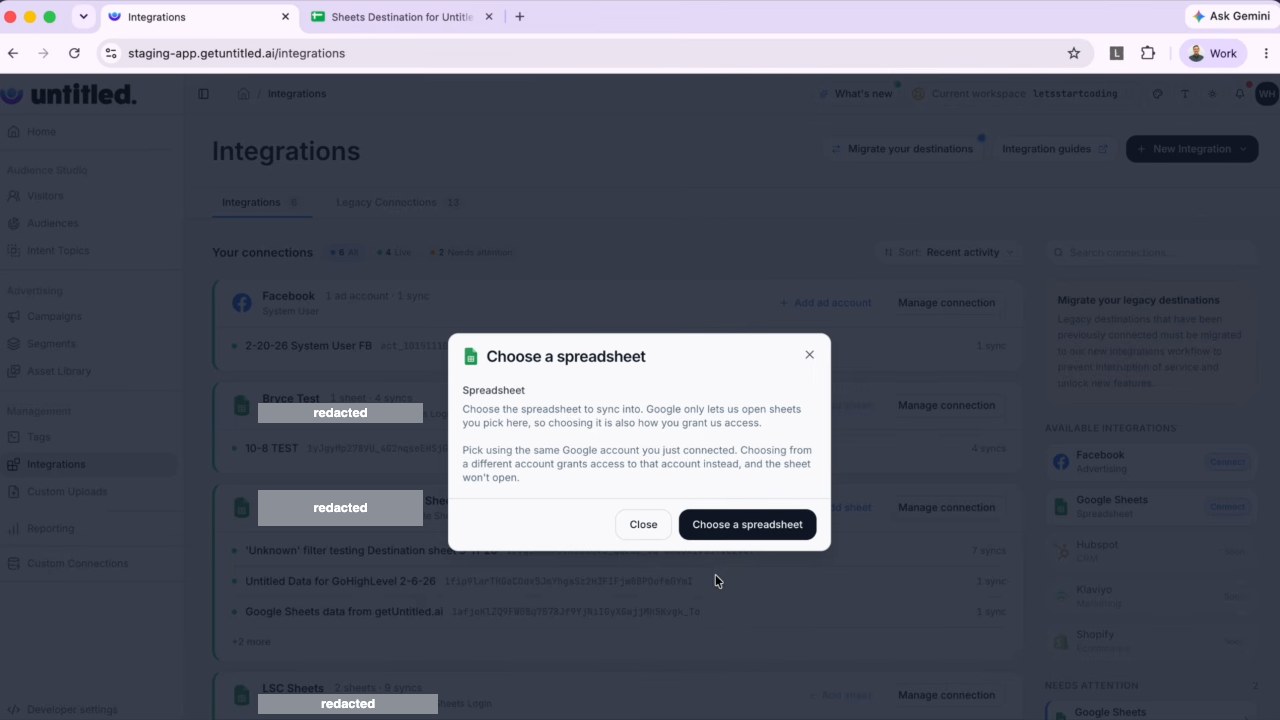
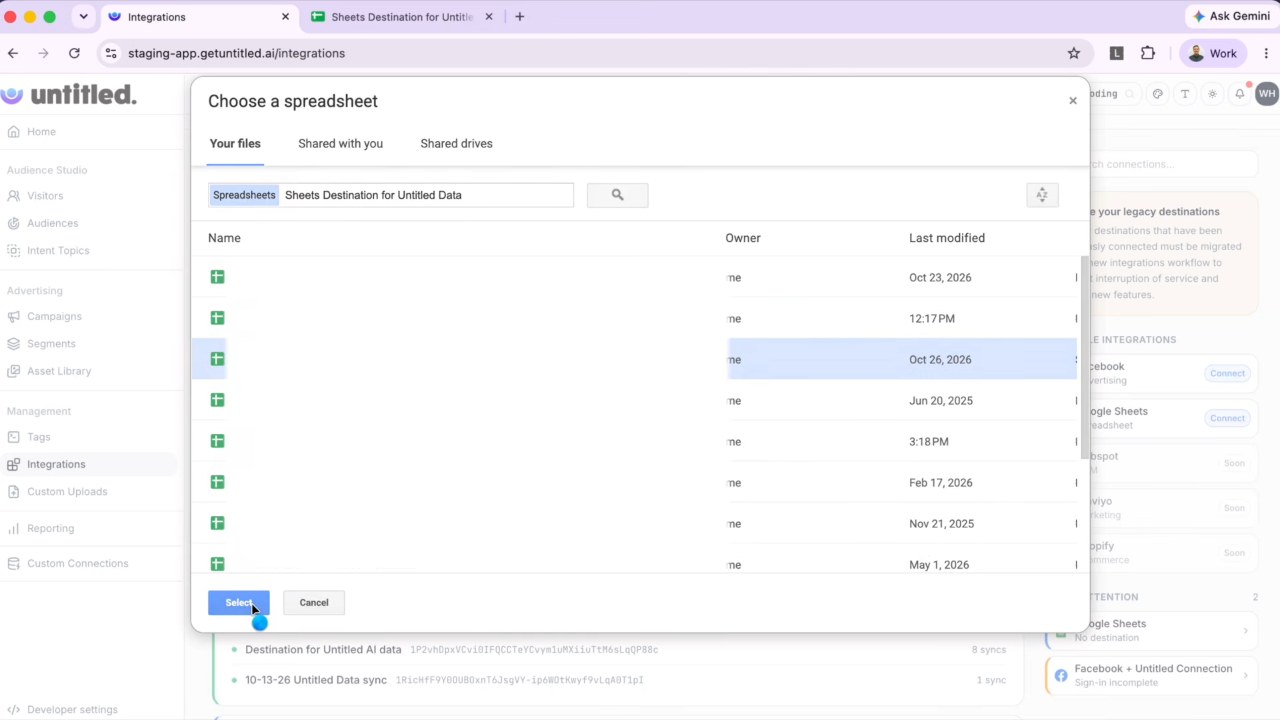
Add your spreadsheet
Untitled only gets access to the spreadsheet you pick here, so the rest of your Drive stays private.
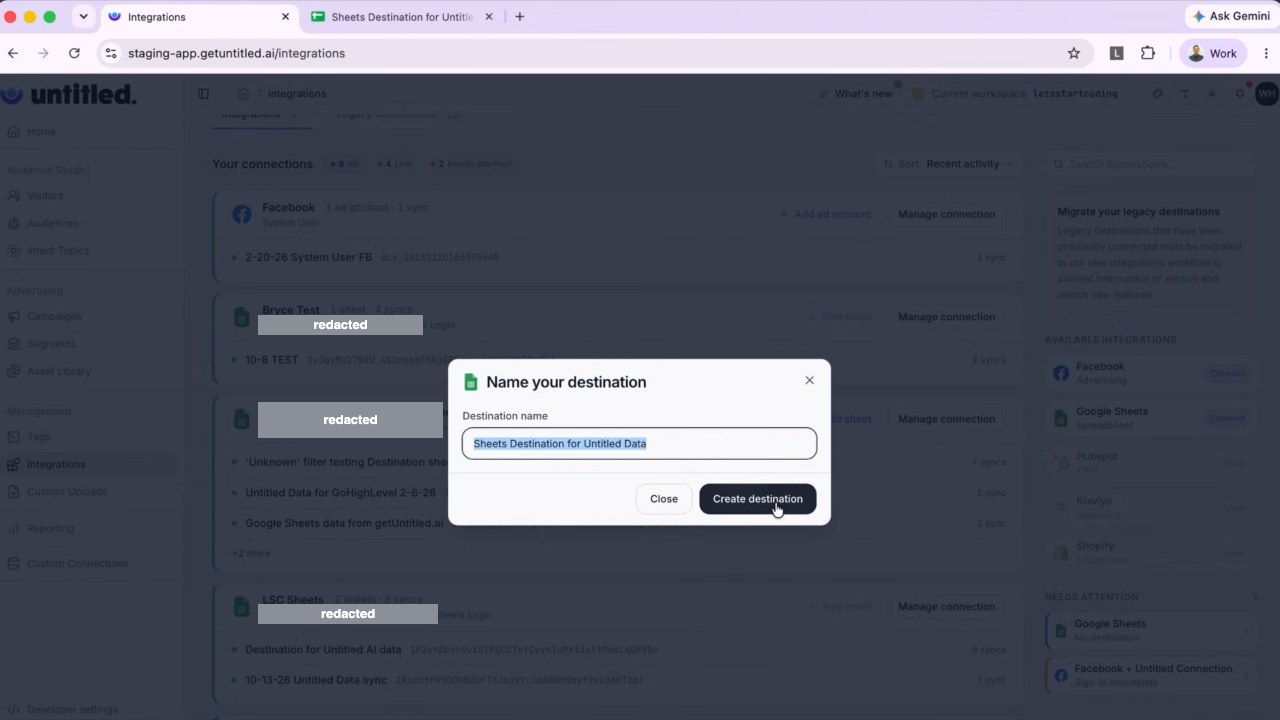
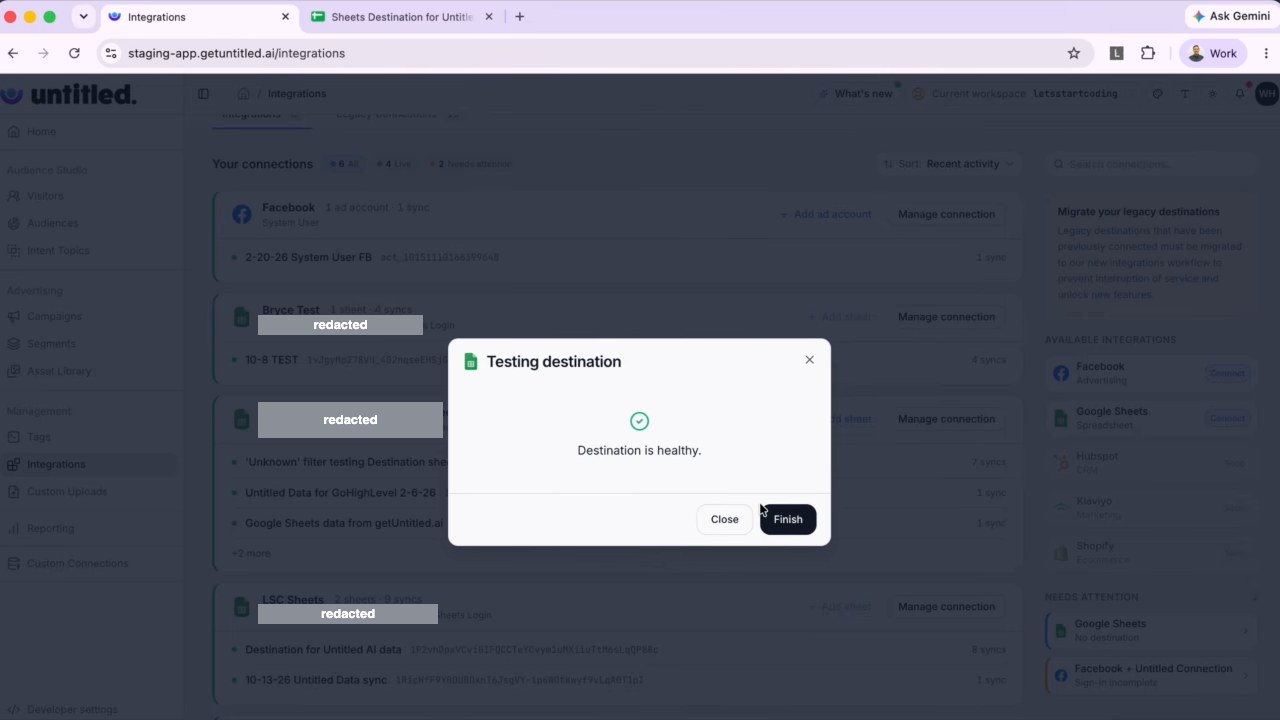
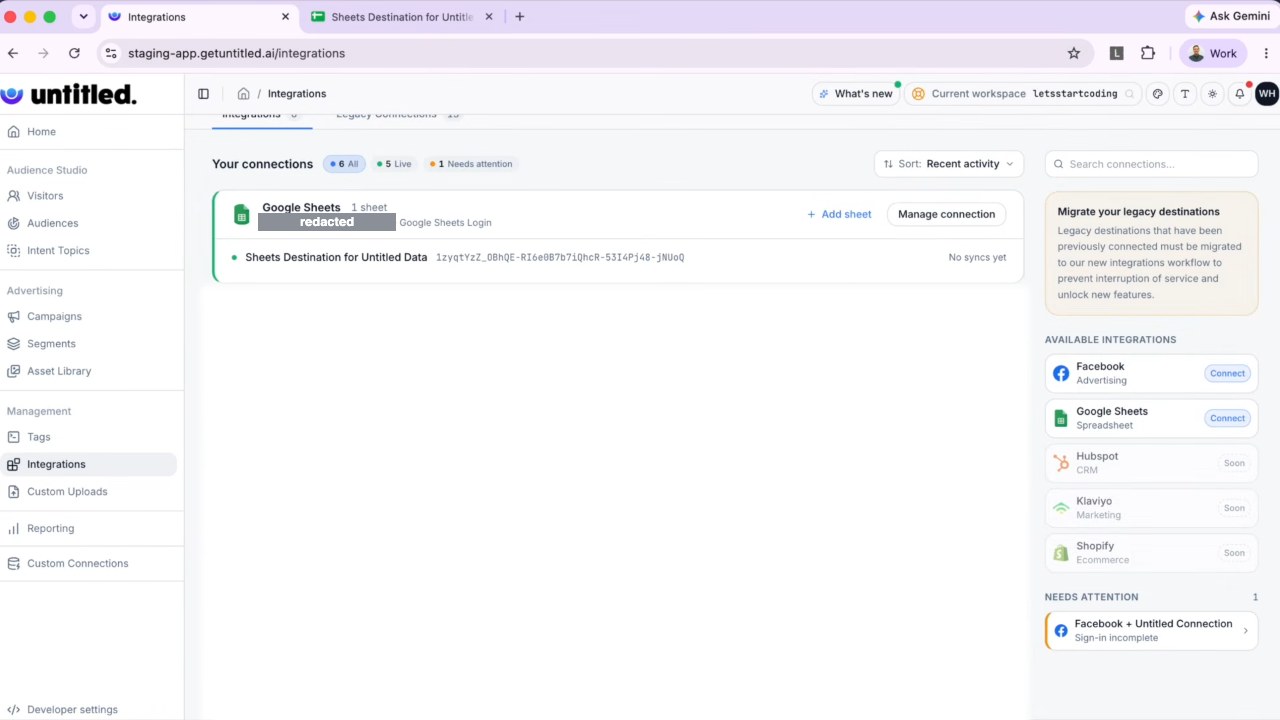
Sync an audience to the sheet
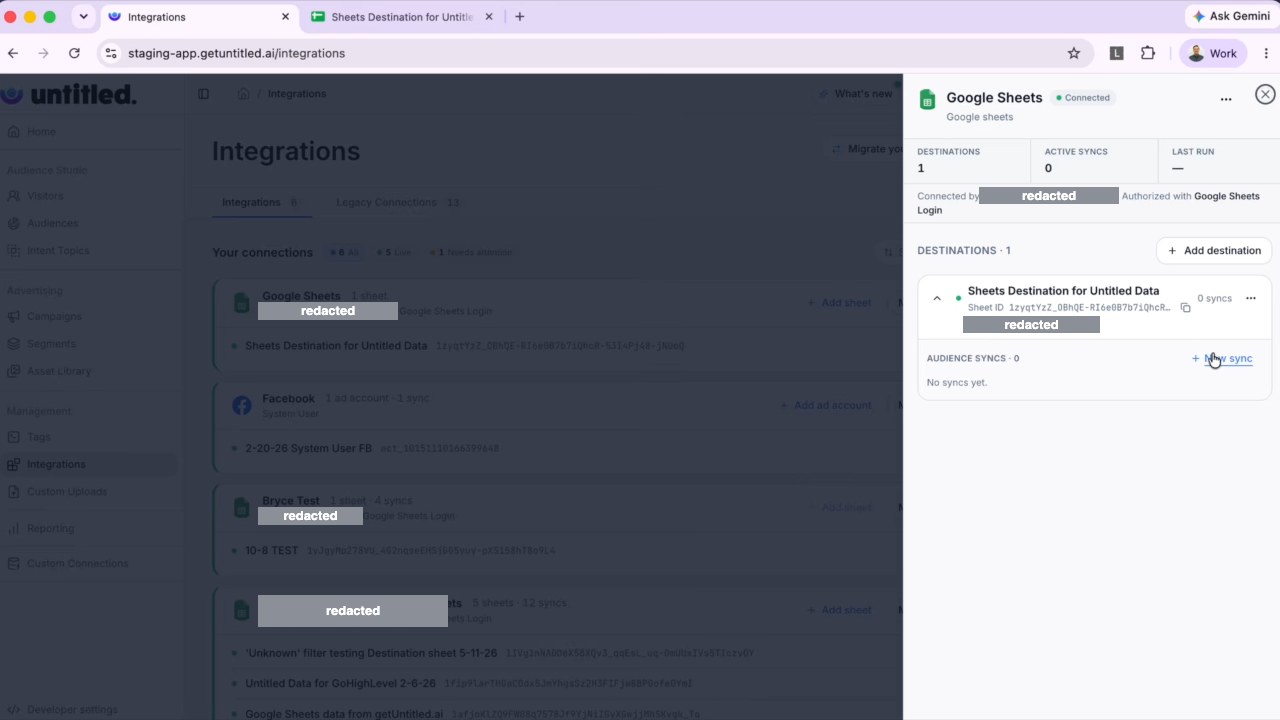
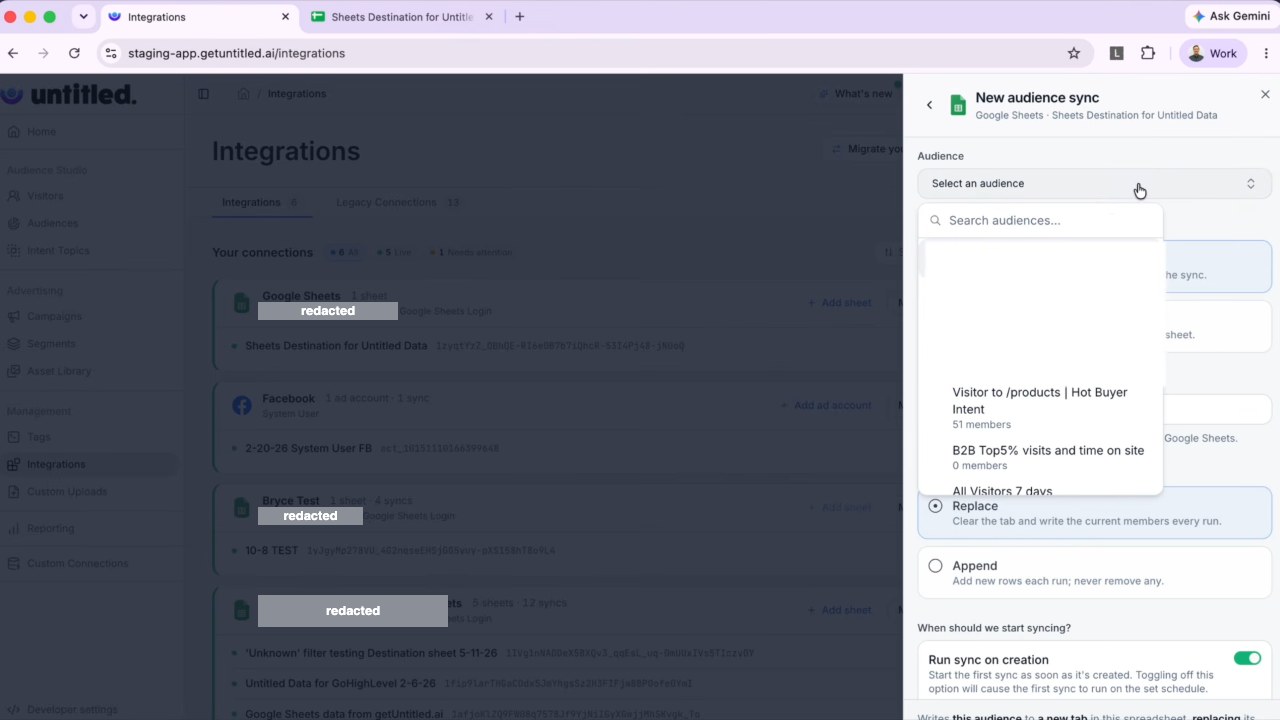
Set up the sync and create it
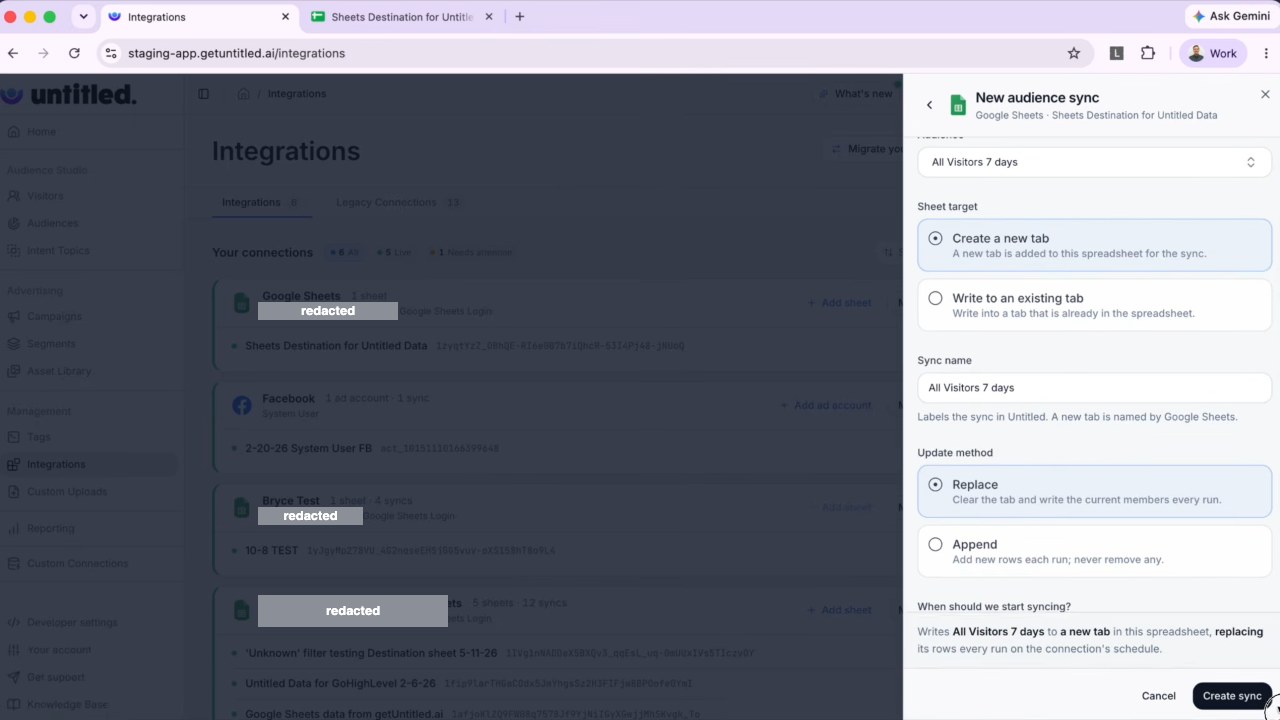
Choose the sync settings, then click Create sync:
Sheet target: Create a new tab adds a tab for this sync. Write to an existing tab uses a tab that's already in the spreadsheet.
Sync name: labels the sync in Untitled. It's filled in from the audience name.
Update method: Replace clears the tab and writes the current members on every run. Append adds new rows on every run and never removes any.
Run sync on creation: leave it on to run the first sync right away. Turn it off to wait for the schedule.
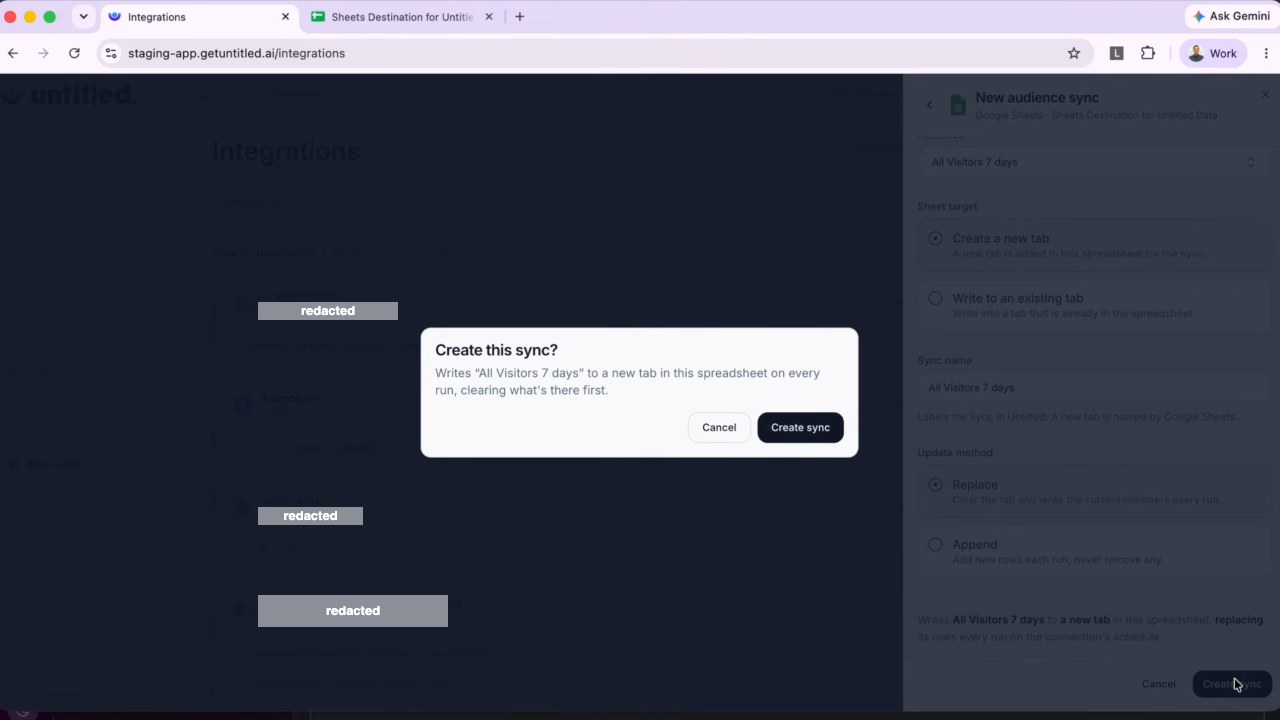
Create sync
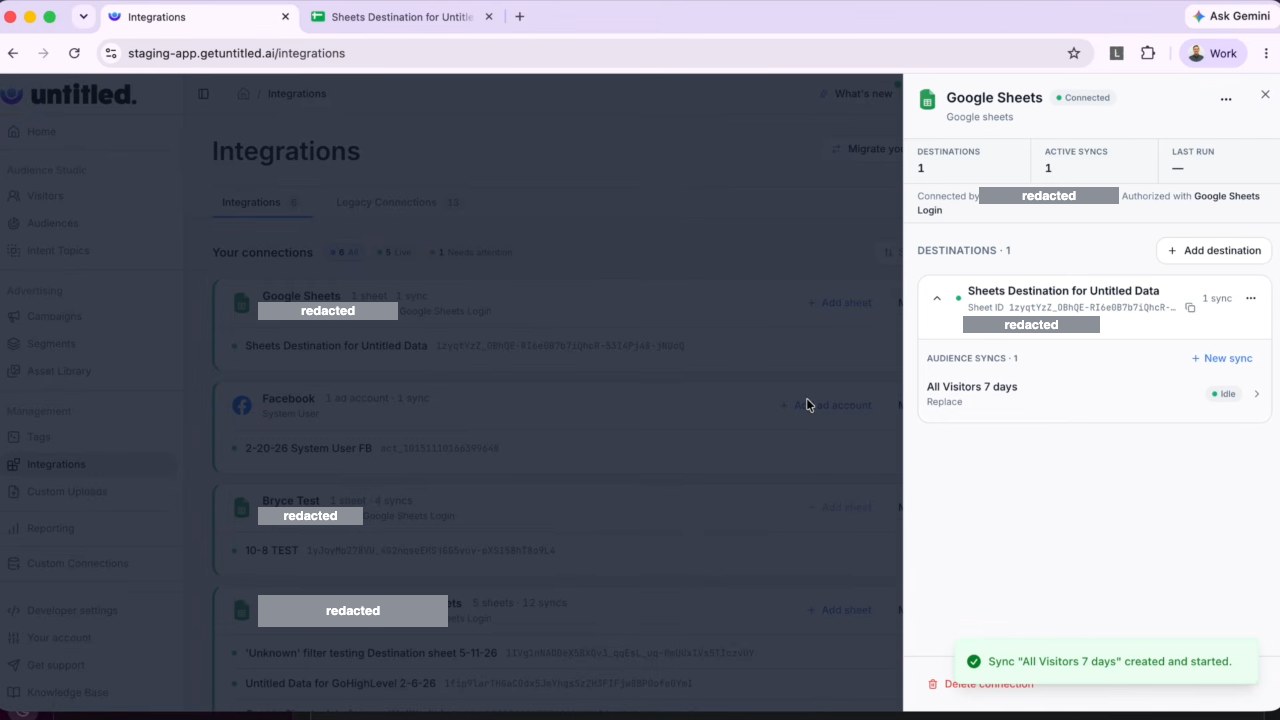
Open the spreadsheet
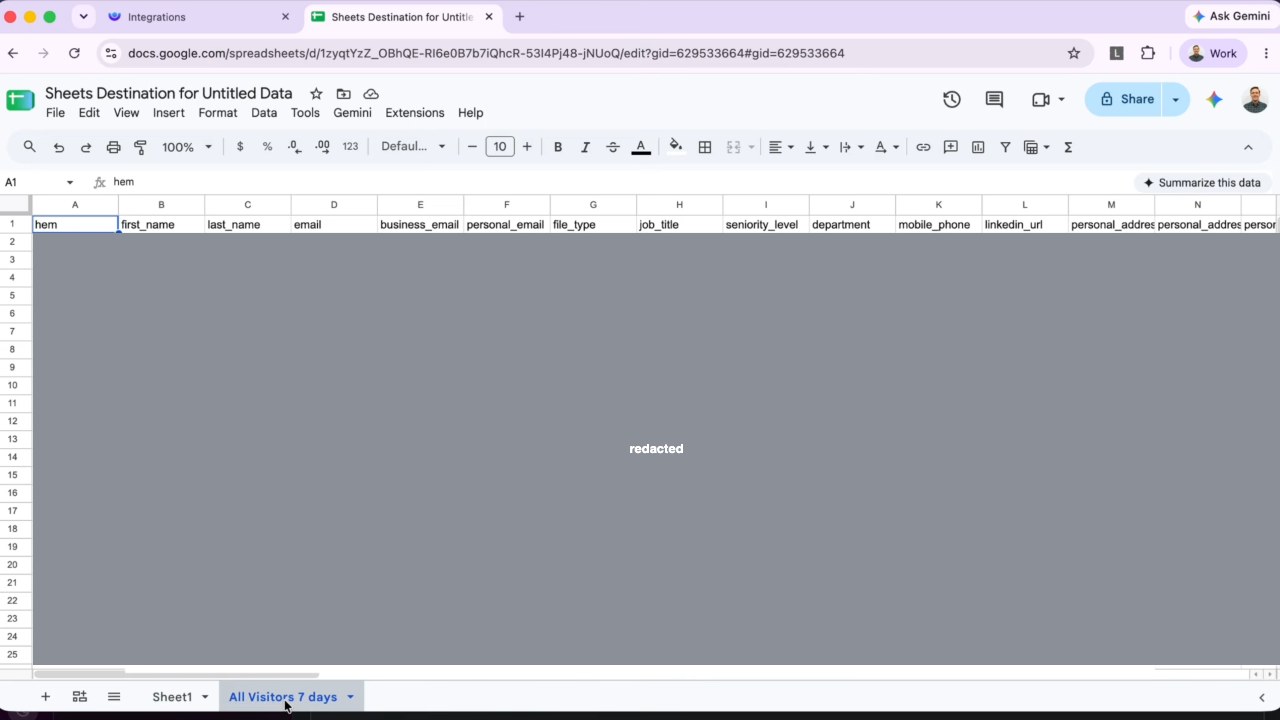
Open your spreadsheet in Google Sheets. A new tab named after the sync holds the audience, with a header row of contact fields such as first_name, email and job_title.
Step by Step Guide: Sync an audience to a Connected Google Sheet
Sync an audience to a Connected Google Sheet
Set up the sync and create it
Choose the sync settings, then click Create sync:
Sheet target: Create a new tab adds a tab for this sync. Write to an existing tab uses a tab that's already in the spreadsheet.
Sync name: labels the sync in Untitled. It's filled in from the audience name.
Update method: Replace clears the tab and writes the current members on every run. Append adds new rows on every run and never removes any.
Run sync on creation: leave it on to run the first sync right away. Turn it off to wait for the schedule.
Create sync
Open the spreadsheet
Open your spreadsheet in Google Sheets. A new tab named after the sync holds the audience, with a header row of contact fields such as first_name, email and job_title.
Migrate Google Spreadsheet connections made before October 15, 2026
Who needs to migrate
If you connected Google Sheets to your Untitled account before October 15, 2026, those connections will likely need to be migrated. Not sure if you need to migrate? Email support@getuntitled.ai and we will check for you!
Before you begin
There is some vocabulary that will help make the migration simpler.
When migrating an Untitled Audience to the new Google Sheets integration, you will make a connection to a Google Drive account. If you are migrating Untitled Audiences, make sure you are either the owner or an editor of the Google Sheets where your Untitled Audience data appears.
A sync in Untitled refers to what Google calls a spreadsheet.
You can have multiple Untitled Audiences syncing to a single spreadsheet. When you do, each Audience is syncing to a tab within the spreadsheet, which Google calls a sheet.
Step-by-step guide
From the Integrations page of your Untitled account, click the Legacy Connections tab and ensure you have Destinations selected.
Click Migrate on any of your existing Google Sheets migrations.

In the popup that opens, drop down the menu for Choose a connection and select Create a new connection
You will need to do this at least once to create a connection between your Untitled account and your Google Drive account.

Name the Google Sheets connection.
This name only appears in Untitled and it can be edited later. If you have multiple users in your Untitled account who will integrate with Google Sheets, a good name may be [Your Name]'s Sheets to distinguish the connections.

Click Continue to sign-in
Click Connect, and then choose the account which owns, or has editor access to, the Sheets you want your Untitled data to sync to.

Allow Untitled to edit the specific Drive files you use with this app. Untitled does not have edit, create, or delete permissions for your other files.
Once the connection is made, grant Untitled access to the file where your Audience is currently syncing.
If your Audience syncs only to one Google Sheet, then only one file will be available to choose here.
If the file selector is blank, it it most likely because you do not have ownership or editor access to the file where the Untitled Audience is currently syncing.*

Grant access to sheets within the spreadsheet you just connected and click Migrate syncs .
If your existing sync has one sheet within the spreadsheet, you will see only one Tab ID here.

A success message will indicate that your migration is complete.
Repeat the process for each connection (unique Google spreadsheet) that receives Untitled data.
Sync Schedule
Your audience will push updates daily at 12:15 pm EST. With the audience's filter settings applied, new visitors that meet the filter criteria will be continuously refreshed and added to your list automatically.
Destination Overview
This user guide will walk you through the process of syncing segmented Audiences from your Untitled account to Google Sheets effectively. When configuring Google Sheets as your destination in Untitled, all audiences will be sent to a single Google Sheet. Each audience will have its own separate tab within the sheet.
When you set up a new audience to sync with your Google Sheets destination, you'll be asked to create a new tab in the linked Google Sheet file. You'll then need to share the URL link to that specific tab with Untitled to complete the syncing process. We recommend naming each sheet tab with the exact title of the corresponding Untitled audience being synced to that tab.
Table Structure in Google Sheets
The column titled “match_type” will indicate whether a lead is B2B, B2C, or PTE. The location of the email field for each lead type is outlined in the table below:
B2B
business_email
3
B2C
personal_email
41
PTE
email email_address_lc
22
Legacy step-by-step guide of connecting Untitled to Google Sheets
Connection Instructions
Starting Out
First, log into your Untitled account.
Select
Destinationsin the left navigation menu.Find Google Sheets and click
Connecton the Destination Card.A popup will appear prompting you to name your Google Sheet Destination. Make it something descriptive like "Untitled G-Sheet Audiences" and then select
Connect

Another popup modal will appear informing you the Google Sheet Destination is ready to be authenticated. Select
Continue- you will be redirected to a new window.

In the new window, first select
Continueto allow a connection to Google Sheets.

Next, you will be asked to share access to your Google Sheet. First,
copythe provided email (press the icon on the far right of this email field for easy copy/paste of the full email url).

Keep this window open, create a new tab or window, and login to Google.
Configure Google Sheet Access to Untitled
Log in to your Google account and create a new Google Sheet file.
In the top right corner, select the
Sharebutton for the filePaste the email you copied from the Untitled window, ensure "Editor" access is being granted, and hit
Send

Depending on your organizations Google access controls, you may be asked to confirm the external share. Click
Share anyway

Navigate back to the previous window (where you copy/pasted the census email from) and click
Continueto begin the authentication test.Wait for the success message to appear. Select
Finishonce the connection has successfully tested.

You can now safely close this window and being Syncing Audiences to your Google Sheet Destination!

Once your sheet is successfully connected, you'll see a green indicator icon next to the Google Sheets Destination card as shown in the example below

Sync Your Audience to Google Sheets
Navigate back to Untitled and secelect the Audiences page
Select the
Viewbutton next to the audience you want to push to Google Sheets (or clickSync to destinationif it's a brand new audience with no existing destinations attached)

Click the
Destinationstab of the AudienceLocate the Google Sheet you want to connect (e.g. if you have multiple connected, they will all appear here), and select
Setup syncon the Destination Card

IMPORTANT: You must select from the drop down "Select your sheet" > this will populate the available Spreadsheet TABS in your Google Sheet. If you do not see the desired tab from the drop down, try clicking the refresh icon. Once you've located the tab you want to sync data to, click
Continue

Once you've clicked continue, you'll see the initial sync message on the Destination card. The initial sync to Google Sheets may take up to 5 minutes to populate.

Once the initial sync has been completed, you should see the green indicator message next to the sync status message letting you know that the sheet will now sync resultant audience data daily at 12:15 PM ET.

Proceed to the next section in the event you would like to connect additional audiences to the SAME Google Sheet you just completed setting up as an Untitled Destination.
New Audience Syncs to the Same Google Sheet
Each time you setup a new audience to sync with your Google Sheets destination, complete the steps below:
Open your linked Google Sheet file and create a new Sheet tab.
We recommend naming each sheet tab with the exact title of the corresponding Untitled audience being synced to that tab.
Select
Setup syncon the Google Sheet Card from within the Destination view inside of the Audience you intend to sync.Select the specific Sheet tab that you would like to sync your audience to (see Step 5 in the previous section for what to do if you're new Sheet tab does NOT appear in the "Select your sheet" drop down list).
Press
Continueto Complete Setup.
Done! Your audience has been successfully integrated with Google Sheets. The initial sync to Google Sheets may take up to 5 minutes to populate.
Sync Schedule
Your audience will push updates daily at 12:15 pm EST. With the audience's filter settings applied, new visitors that meet the filter criteria will be continuously refreshed and added to your list automatically.
You can integrate an unlimited number of saved audiences in Untitled to your Google Sheet file by repeating the last seven steps.
Need Further Support or Have Additional Questions?
Check out our FAQs to get some answers, start a chat on our website, or get connected directly with our team here.
Last updated
Was this helpful?